Red Wine in Summer: Time to Challenge an Old Wine Myth
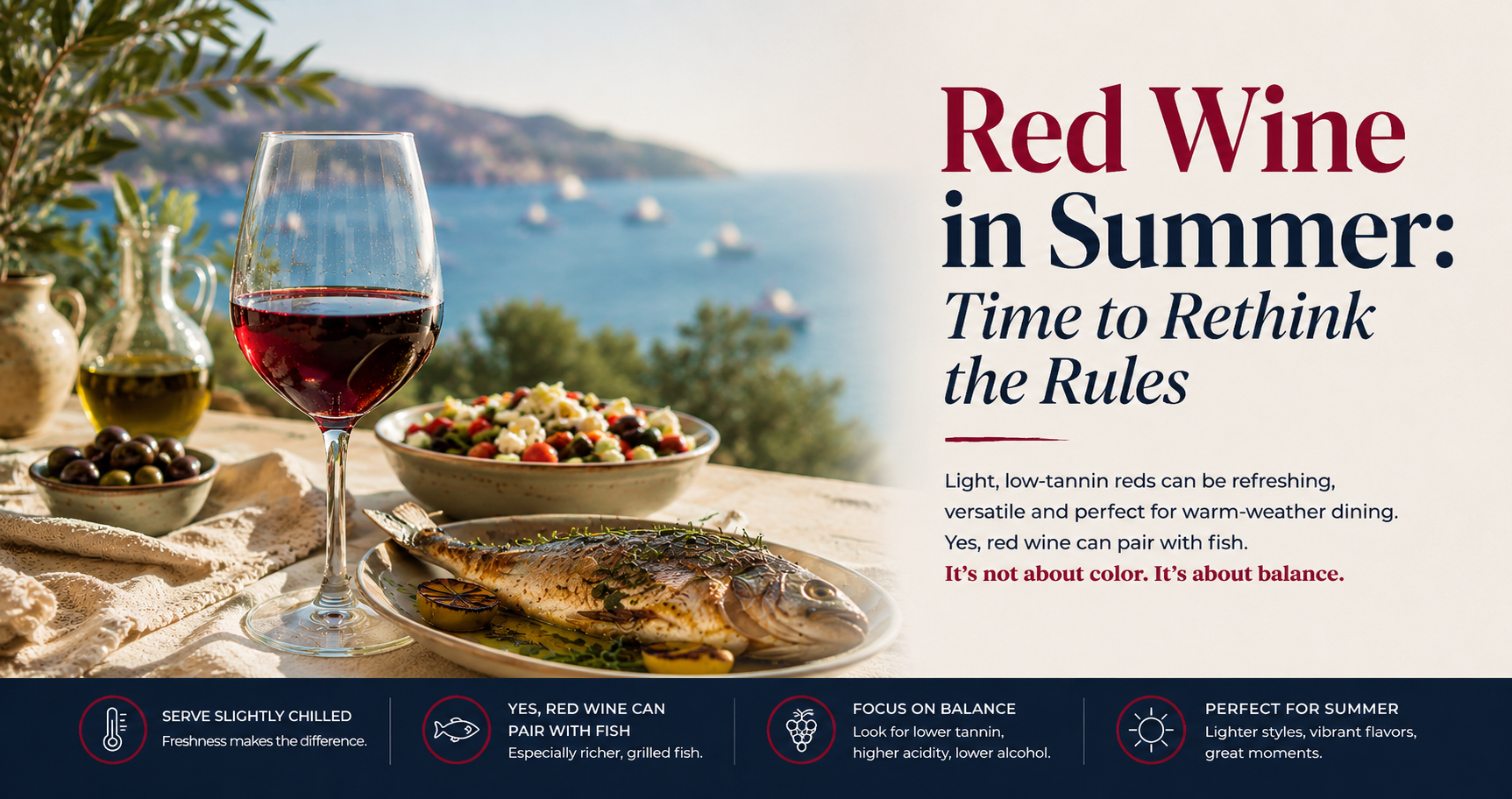
Every summer, restaurants, retailers, and consumers naturally gravitate toward white, rosé, and sparkling wines. And every summer, one assumption quietly returns: "Red wine is not for hot weather." But is that really true? For decades, wine drinkers have been taught a series of simple rules:
- White wine with fish
- Red wine with meat
- Red wine for winter
- Rosé for summer
The problem is that wine is far more interesting than these rules suggest. Today, sommeliers and wine professionals increasingly focus on a wine's structure rather than its color. Acidity, tannin, body, alcohol level, and serving temperature have a much greater impact on enjoyment than whether a wine is red or white. A light-bodied Pinot Noir, Gamay, or Cinsault, served slightly chilled can be remarkably refreshing on a warm summer evening. In many cases, these wines offer the freshness, elegance, and versatility that consumers actively seek during the summer months. The same evolution is happening in food pairing. The old belief that red wine should never accompany fish is gradually disappearing. Grilled salmon, tuna, swordfish, and Mediterranean seafood dishes often pair beautifully with lighter, lower-tannin red wines. The key is balance. What many people dislike is not red wine itself. It is the experience of drinking a heavy, high-alcohol, heavily oaked red wine at 35°C. That is very different from enjoying a vibrant, chilled red wine alongside grilled seafood on a summer terrace. As an industry, we have an opportunity to broaden the conversation. Instead of asking whether summer is the season for red wine, perhaps we should ask: Which red wines deserve a place at the summer table? Consumers are increasingly open to experimentation, and summer may be the perfect moment to rediscover a category that has been unfairly confined to colder months. Red wine is not just a winter wine. Served correctly, it can be one of summer's most surprising pleasures. What do you think?
Do you enjoy red wine during summer?